Custom Metal Fabrication: Five Connected Production Disciplines
JALIN connects five production disciplines in one factory in Zhongshan, China: product development and tooling, cutting and forming, welding, surface finishing, and inspection and packing. Engineering review, tooling trials and pilot production establish the manufacturing route, while finished-product checks and protective packaging prepare metal parts and assemblies for release.
2,000+setsManufacturing equipment
While one production line is running, technicians prepare tooling, equipment and process settings for the next line in parallel. This machine-ready scheduling approach reduces operator waiting time, shortens changeovers and improves production efficiency.
01 / Product Development & Tooling
Product Development, DFM & Tooling
Design to Mold. Made to Last.
CAD and 3D design, engineering review, tooling and mold development, mold trials and pilot production — each stage validated before mass production.
From CAD development and engineering review to tooling, mold trials and pilot production, each product is validated before mass production. After tooling is approved through mold trials, a pilot run is used to verify the complete manufacturing process, including equipment, fixtures, process flow, cycle time and production consistency.
Tooling equipment
- Wire EDM, CNC lathes, grinding, milling and machining centers support tooling work.
- 01CAD / 3D Design
- 02Engineering Review
- 03Tooling / Mold Development
- 04Mold Trial
- 05Pilot Production
- 06Mass-production Validation


02 / Cut & Form
Cutting, Forming & Metal Stamping
Turn stock into repeatable parts.
Wire, tube, and sheet move through programmed laser processing, forming, stamping, and fixture-controlled operations.
2D/3D forming, tube cutting and bending, sheet blanking, and deburring.
Metal Stamping & In-House Tooling
Metal stamping runs on punch presses from 15 to 500 tons, including progressive dies, with hydraulic deep drawing up to 500 tons, press brakes and fiber laser sheet cutting. Tooling for metal stamping parts is made in-house on wire EDM, CNC lathes, and grinding, milling and machining centers.
Sheet, wire and tube processing
- Sheet processing also uses press brakes and fiber laser cutting.
- 3D CNC forming handles low-carbon steel wire from Ø1.5 to 12.7 mm.
- Tube bending handles tubes up to Ø50 mm with a 3.0 mm wall.
Bent and cut tube parts are covered under tube fabrication


03 / Weld
Robotic MIG/MAG & Laser Welding
Controlled welding. Repeatable production.
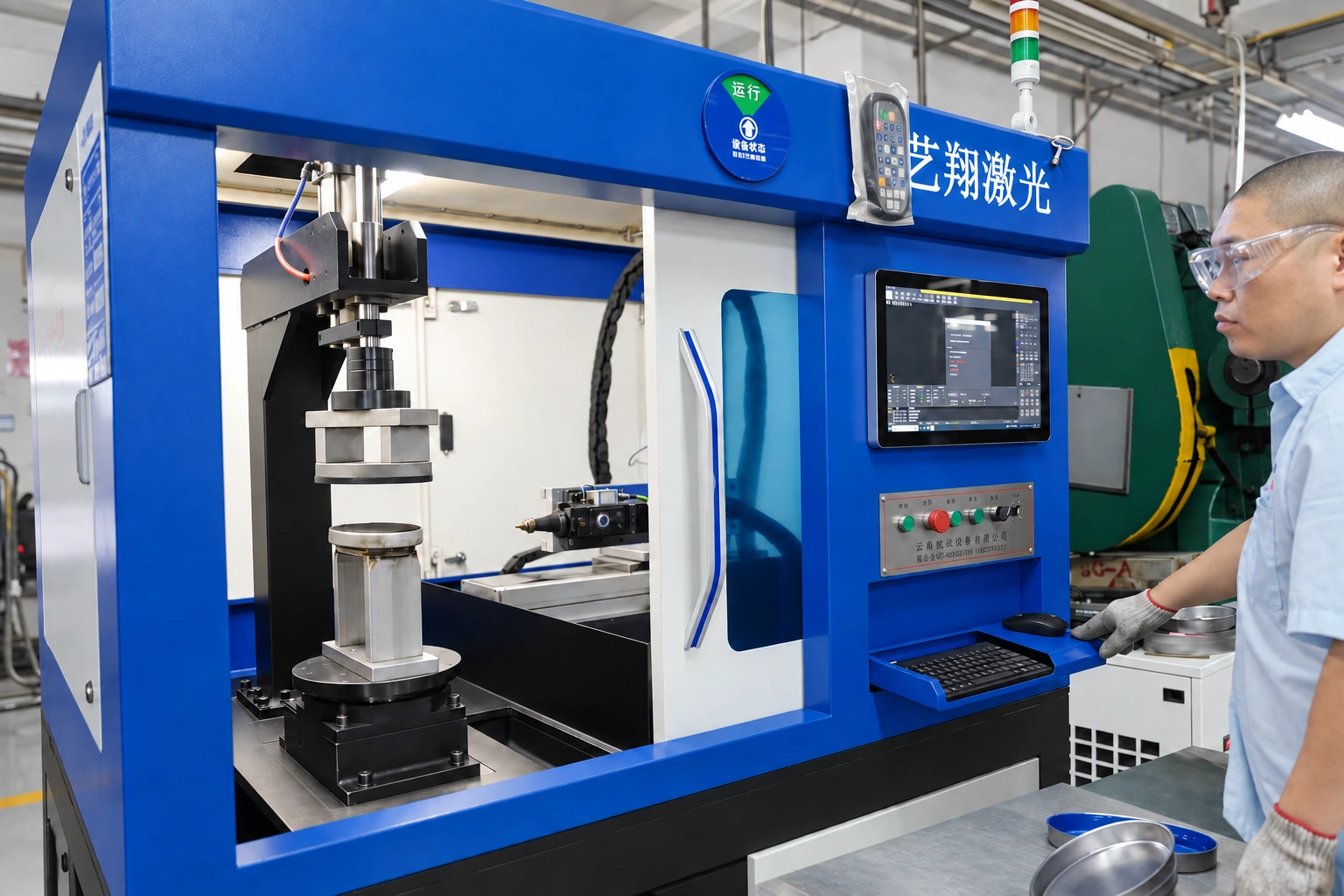
Robotic laser welding and automated part handling support stable joints, consistent cycle times, and repeatable production.
Robotic and dedicated welding equipment for repeatable joints and assemblies.
Welding equipment and scope
- 15 Panasonic welding robots use gas-shielded MIG/MAG welding for circumferential, fillet, T and straight seams on sheet and tube.
- Robotic and handheld laser welding handles steel, stainless steel and aluminum up to 4.0 mm thick.
- Automatic mesh resistance welding is available.


04 / Surface
Surface Finishing
Finish for real-world use.
Controlled coating, electroplating and passivation processes are selected to meet specified finish requirements for metal products.
Polishing, electropolishing, electroplating, e-coating, powder coating, waterborne coating, and passivation.
E-Coating (Electrocoating)
- E-coating (electrophoretic coating) is available in clear, matte and colored finishes.
Decorative Cu-Ni-Cr Plating
- The finishing route is reviewed per project.
Electrostatic Powder Coating
- Two powder coating lines use different pretreatments: zinc phosphate on one line and silane/zirconium non-phosphate treatment on the other.
- Typical powder coating film thickness is 60–150 μm, cured at 180–220 °C; special parts follow their own specification.
Electropolishing & Passivation for Stainless Steel
- Stainless steel finishing includes electropolishing and passivation for matte or bright surfaces, and magnetic polishing.
- Polishing uses 9 ABB robotic polishing stations for sheet, tube and drawn parts weighing up to 20 kg, plus mirror polishing for bright surfaces.
Waterborne coating is applied on the water-based liquid paint lines, which include a line for small, mixed batches.
Coating checks cover film thickness, gloss (ASTM D523, 60°), color difference (L*a*b*, D65 light booth), cross-hatch adhesion, pencil hardness, bend testing and salt spray.


05 / Inspect & Pack
Inspection & Export Packing
Verify, protect, and release.
Finished surfaces and packing configurations are reviewed before labeling, palletizing, and shipment release.
Finished-product inspection, labeling, and protective packaging before release.
Inspection
13 checkpoints across material, production and shipment release.
Incoming checks cover composition, strength, hardness, dimensions and appearance.
- 01Incoming material inspection
- 02First-article check — formed parts
- 03Approved reference sample
- 04In-process check — formed parts
- 05Semi-finished goods — virtual stock entry
- 06Finishing first-article inspection
- 07Approved reference sample
- 08Finishing in-process inspection
- 09Packing first-article inspection
- 10Approved reference sample
- 11Packing in-process inspection
- 12Finished goods — warehouse entry
- 13Finished goods — outbound release
Packaging
Automated packing, supported by tool and pest control.
- Automatic Carton Sealing Machine
- Automatic Labeling Machine
- Automatic Screw / Hardware Packing Machine
- Sharp-tool Control
- Pest / Insect Control


Metal Fabrication & Surface Finishing FAQ
What surface finishes does JALIN offer?
JALIN offers decorative copper–nickel–chrome plating, stainless steel electropolishing and passivation, e-coating, powder coating and waterborne coating. The finishing route is reviewed per project.
How thick is JALIN's powder coating?
Typically 60–150 μm, cured at 180–220 °C; special parts follow their own specification.
Why is stainless steel electropolished and passivated?
Electropolishing brightens stainless steel surfaces and removes dark weld marks and oil stains. Passivation improves corrosion resistance.
How are coatings inspected?
Coatings are checked for film thickness, gloss (ASTM D523), color difference, cross-hatch adhesion, pencil hardness, bend performance and salt spray resistance.
What is the difference between e-coating and powder coating?
E-coating dips the part in a paint bath and deposits a thin electrophoretic film, while powder coating sprays a dry powder that is cured into a film. JALIN has e-coating and powder coating processes in the factory.
What is the difference between electropolishing and passivation?
Electropolishing removes a thin layer of metal to brighten and smooth the surface, while passivation cleans the surface so its natural oxide layer can restore corrosion resistance. JALIN runs both processes for stainless steel parts in the factory.
What metal stamping capacity does JALIN have?
Metal stamping runs on punch presses from 15 to 500 tons, including progressive dies, with hydraulic deep drawing up to 500 tons, press brakes and fiber laser sheet cutting. Stamping tooling is made in-house on wire EDM, CNC lathes, and grinding, milling and machining centers.
What materials can JALIN laser weld?
Robotic and handheld laser welding handles steel, stainless steel and aluminum up to 4.0 mm thick. 15 Panasonic welding robots also run gas-shielded MIG/MAG welding on sheet and tube.